Wednesday, December 26, 2007

A moment from school

Yeah, this is a bit nostalgic post. When were leaving the school we took a group photo. I studied in a govt. school (Purulia Zilla School) where the focus was always only on studies, extracurricular activities were not encouraged much, it was mostly upon individual to pull out a good show. So there was no culture of photo session for the school leaving batch, but my batch was a trend setter one, hence we started this. Suryashankar was instrumental in taking this picture and all of us knew were going to treasure this pic forever. After we left the school, carrier came as priority and most of us had forgot about the photograph, its a long gone story when I remembered about the photo, my family had shifted from Purulia and I had lost all contacts with Surya. The photo remained permanently in my memory, suddenly after a gap of 11 yrs almost, I got a chance to find Surya and all thanks to orkut. The whole memory refreshed and I desperately wanted the pic, thankfully Surya too kept the pic intact, so he scanned and sent the pics to me. It was a treasure for me, so good to see all my friends. I was happy that I could recollect most of them. We had a pretty infamous batch in school but most of my friends, though were bit casual, still were very talented. When I tried to locate all of them I could find they are spread across all continents and every corner of our country, well done mates, we will meet again at the same stairs someday and feel proud about our batch of 1997, cheers….

Apologies for the poor quality of pic :)


from right bottom: Ritwik, Arijit,Subhajit, Debdutta, Apurba,Amartya, Shantanu,Ujjawal, -,Rupesh,Me,

2nd row: Indrashis, Tuhin, -,-,-,Ghochu(Indrajit), Arup, Atin,Panna, Subhajit2,-, Subhasis 3rd row: Subhra, Sushil, -,-,Amit,-,-,Debjyoti, Pushpendu, Anjan,-, Rudra, Surya, Rajib


Standing: Mukul and Sunil

Our teachers: From left: Gorapada Dey, Ashok Mishra, Debbrata Goswami

From right: Late Kamalesh Dutta, BaridBaran Mishra, Maniklala Das

The unidentified characters are mostly because of the poor image quality :)

Thursday, November 08, 2007

Time changes here!

Last two months have been eventful, but before i stepped into this country of opportunity(!!) I had a much more eventful time, unfortunately i cant pen them down as that may cause some trouble for me. So i was so overwhelmed by those events, when i lost my expensive camera in Detroit, i considered it as extension of those events, but now since i am about to leave from lets write about few interesting events, lets write about the most recent one.
Its fall here, the colour of the leaves turn yellow, red and blue, one can notice them changing. Wind starts blowing from the north, the attire of the people changes (from almost nothing to fully clad!) and the time changes!!yes the standard time. The day light saving time starts from the first sunday of Nov and stays through the winter to April first sunday. So on last sunday, early moring i came out from my friends house in Broomfield to catch the Zipfree shuttle! it was 8:30 a.m in my watch, and as i calculated i shoud be at Boulder by 9:30 a.m. It was a cold windy morning, but there was no bus, since there was a chance that i could miss the bus to Boulder i started walking after 30 min and was cursing the people for the service delay, again after a 3-4 km walk i reached the stop on time and again there was no Bus, i was irritated, annoyed and frustrated too. The chill was penetrating the skin, after a while the Bus came from Denver and I angrily asked the pilot for the cause of delay, he simply apologized and gave a look to me, but i didn't care, my sunday was already spoilt, so i manage to reach home at 11 am, just i was about to tell my misfortune to Woki, my roomie, he blurted out in broken english "Do you know the time is 1 hr. late today?", i looked at him for a while and everything was explained, indeed i remembered the clock was running 1 hr. late. I just gave a smile to him and told "No! i just now experienced it..."

Tuesday, October 30, 2007

UFO over Kolkata!!!???

When I read the news, i was immediately reminded of the song by Anjan Dutta, "Haripada ekjon sadamata chhotokhato lok"! Well although i laughed after reading the news on Times of India, but for someone it was a serious business. Against the popular idea that these extraterrestial objects are visible for a very short period, this stayed on the sky for 3 hrs, in the late night sky over kolkata !!! Some person named Farhan Akhtar had caught a 2.30 hrs. video of this object and it seems he is not the only person who saw it, there were lot of people gathered at the EM Bypass that time to see that object. According to Mr. Akhtar it was visible even after dawn and after that it disappeared. Sounds strange right? well with time it may add to another mysterious story but for Kolkatans its the first occasion. Well I hope the ETs didn't take Haripada kerani along with them!!

here is a video put on the youtube, taken by a cell ph camera, see the changing colour of the objects, looks beautiful....

youtube clip

Thursday, October 25, 2007

Royal tigers: a response

Sometimes back i had a post on tiger sensus, and i expected someone will enrich my knowledge about it, i felt very happy to find this response to my post from the Author of the book Guidelines for Estimating Wild Tiger Population Using the Pugmark Technique Dr. L.A.K Singh, it carried some important information and i thought i should post it....thanks Dr. Sing for the information

I am glad to see your interest in tiger numbers. I have studied tigers and refined the pugmark technique during my 16+years tenure in Similipal Tiger Reserve, Orissa. The sincerity with which the staff conduct pugmark tracking and the type of data produced from pugmark tracking is unmatchable. No other method can surpass pugmark tracking. It is quick, it allows us to know the movement area of each tiger and leopard, their population structure- male, female, cub with pugmark sizes (hence, idea about age class too), links among cub-mothr, female-male; their spatial distribution map; it is economic, it employs local tribals who skill in animal tracking. A Guard, at the end of census is able to know, which exact tigers are in his territory and in his neighbouring territory. There is no statistical extrapolation, hence no mathematical tigers. Do you need a copy of the WWF guideline? send your e-mail address. ........

Book title:Singh, L. A. K. (2000):
Tracking Tigers : Guidelines for Estimating Wild Tiger Population Using the Pugmark Technique. (Revised Edition). WWF Tiger Conservation Programme, New Delhi.


Tuesday, October 16, 2007

So Here I am

It was night, quite late, Chicago O Hare Airport was deserted. It was Sunday so it was understandable. I was trying to make a cal, to let my family know that I have reached here safely. Whenever someone comes to US people back home gets worried for obvious reasons. So I wanted to let them know. I was trying hard to call home but didn’t know how to reach there using the AT&T coin telephone, already I had spent few quarters and was desperately looking for help, I saw an American gentleman in a big hurry went past me, seeing him in a hurry I didn’t stop him, but he stopped, he realized I need help so he came and asked me whether he can be of any help, so this man tried his best to make the call, unfortunately he too couldn’t make, so he picked up and called AT&T and asked why there is no instructions, and finally he made another call to get me the detail instructions, I was touched by this gesture, he apologitic and told me since he cant make the international calls from his cell so he couldn’t help me, I was really amazed didn’t expect the help, so I could finally make the calls. Before leaving he told me he knew about India and since he had to catch a flight in 15 min he couldn’t stay with me till I finished the cal….Welcome to America 1.

Friday, October 05, 2007

A fine balance: short review

I bought this book as lots of recommendations poured in, and finally yesterday I end up reading it, I has been a really depressing novel, I didn’t read such novel for quite sometime. Rohinton Mistry, as many says is an outstanding author and truly speaking “ A fine balance” has been written with similar craftsmanship, it was an extremely great one to read.
The novel is written with the emergency period at the backdrop (1975), so during the whole book, Rohinton did a great job in keeping the tension alive. There are many characters in this novel but the majority part is based on couple of Parsi families, although Rohinton didn’t get deep inside the Parsi culture but still he mentions a lot about them. There are many small stories which were finally streamlined to form the main one, but manly the novel was built around a woman called Mrs. Dina Dalal, very strong character by itself, will draw your attention all the time. Rohinton nicely described the misery, exploitation during the time of emergency, without being explicit. Social oppression on the “lower” caste has been depicted extremely vividly in the novel. Before I get distracted, let me sum
marize the story, Dina Schroff is a Parsi lady who after a painful stay with her brother gets a short lived freedom when she married a Parsi guy called Rustom Dalal, but Rustom passed away in an accident, Dina went alone to survive on her own, and during her professional search for tailors she came across couple of tailors: Ishvar and Omprakash, who were cobbler by their family profession and turned int tailors, had gone trough immense torture in the hands of Jamindars in the village and their misfortune pushed them to the City. Dina gets a paying guest who is a son of his friend, Maneck Kolah, from hills and again had a different set of façade. The best part of the novel is the time when these 4 characters stays together and presents different philosophies towards life. Rohinton, although didn't mention much about the city, but it will surely remind you about Bombay, instead of Delhi. Altogether a gripping novel, with lots of painful truth inscribed.

The novel has a theme, and it was mentioned at least couple of times, “everything ends badly..”. Its an extremely depressing line which made this novel unbearable. None of the characters, who struggled all thorough the novel was spared. The identity of the characters were never lost, though the suffering remained, except the crooks everyone in the end was at a loss. It was on the struggle people did to survive, but the end was pretty dramatic and saddening. Another point that struck me was the backdrop of emergency was not removed even after the ordeal was over, Rohinton mentioned about the same hopeless situation which prevailed. Altogether the book is extremely good to read only if you can bear the depression.
There is a movie also coming on this book, I hope the movie will be good, but I don’t dare to watch it

Few links:

Movie

Readers group

Sunday, June 17, 2007

Wanna go for a treak :(

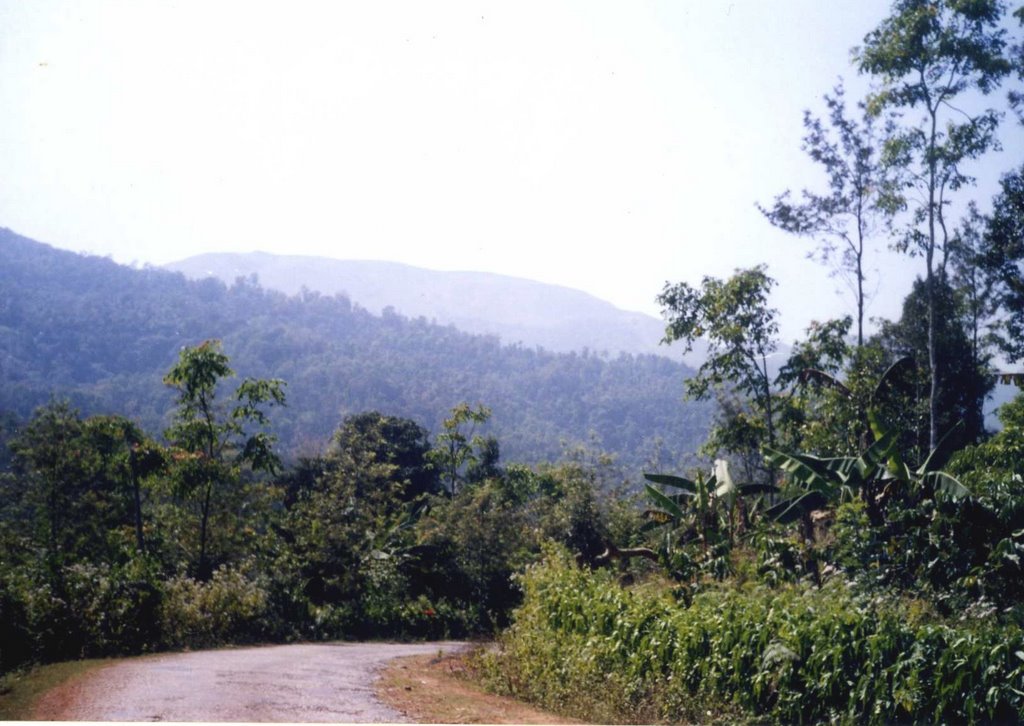
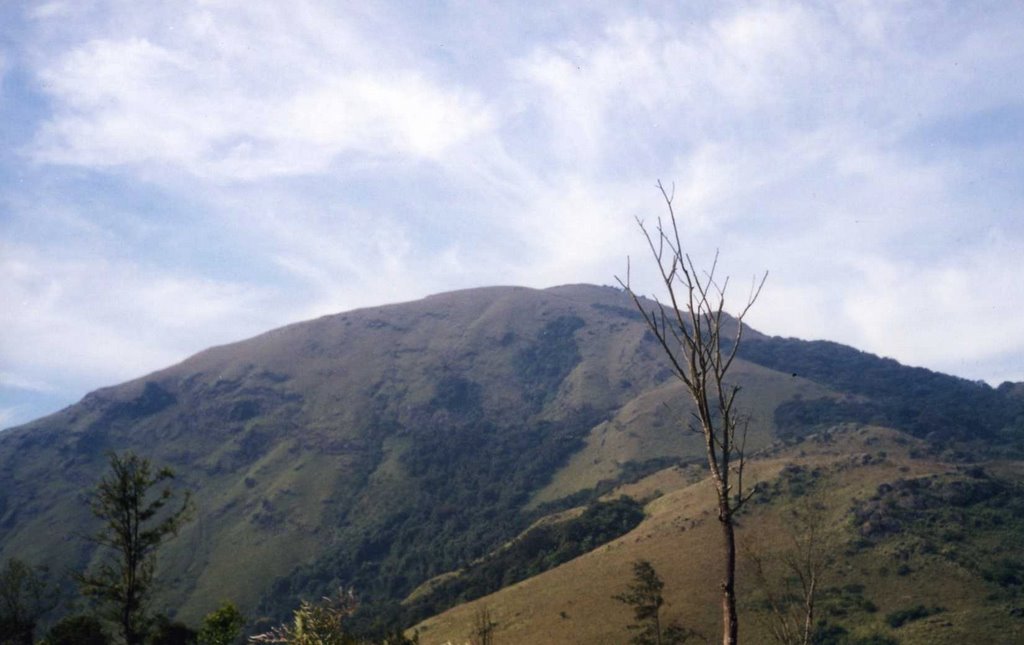
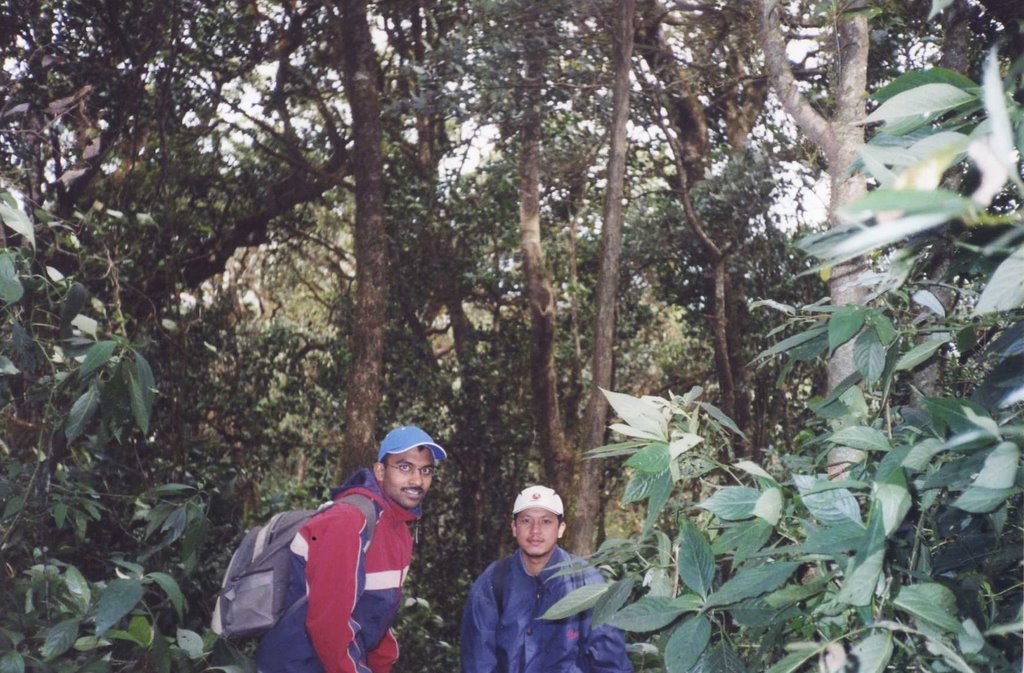
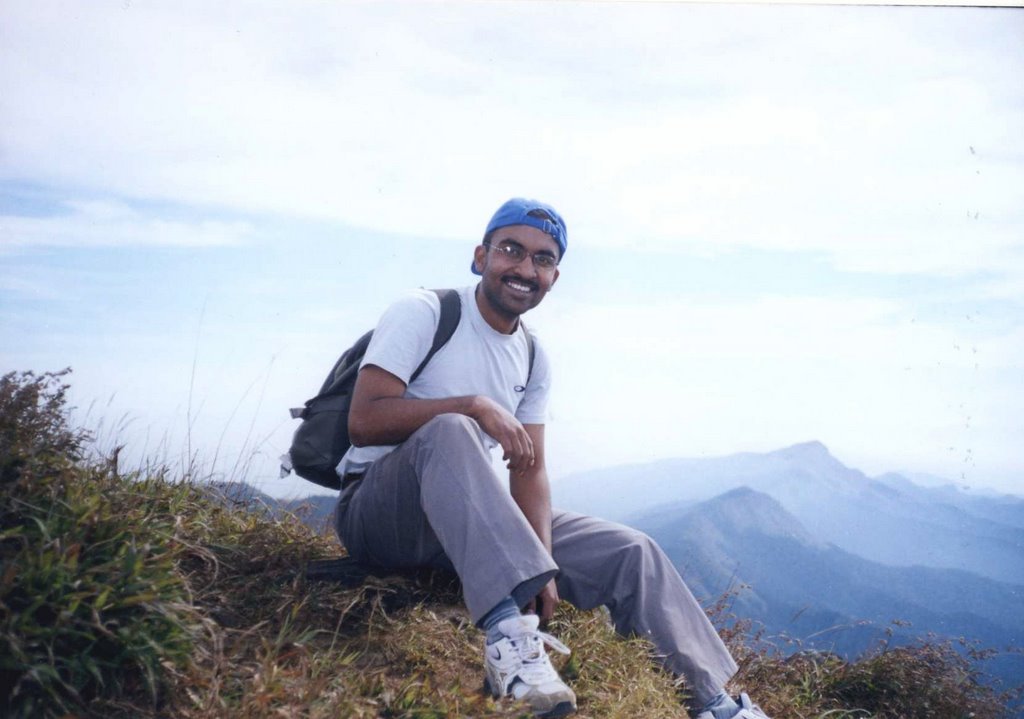
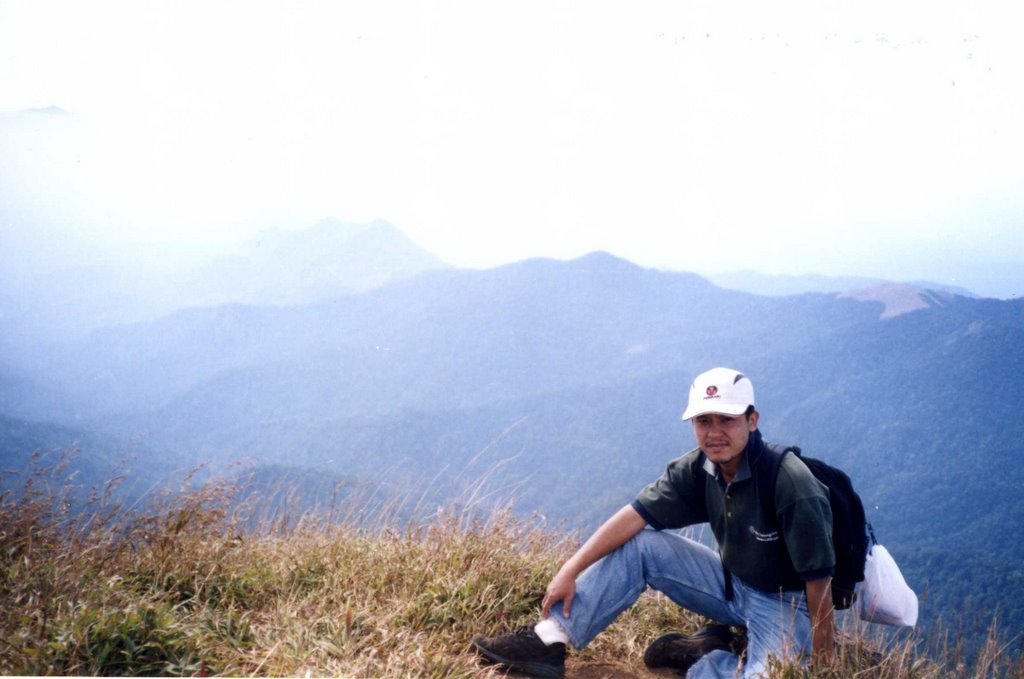
Today i dug out couple of pics from the PC. Feeling xtremely nostalgic wanna go for a trek before the last few left in our group disappear from Bangalore, these ones from our trek to Narsimhaparvata quite sometimes back, it was awesome place .....

here is another

Saturday, May 26, 2007

Royal Tigers: Can counting techniques save them?

This is a scientific technique I am gonna pen down, I have no expertise in this and don’t know the nuances of the issue also. It’s a simple effort to scribble the info available in the literature and books and online.

Its not only the media, concerns are all over India and world about steep decline in the tiger population in India. In general tigers are a species which is demographically distributed among 13 Asian countries. It is one of the rare royal species which is about to be extinct. In India there are 28 reserve forests for tigers and tiger census are carried out frequently. Wildlife Institute of India, Dehradun, came with a shocking revelation recently. they published a census report for tigers in 16 of these forests (rest they are going to publish in December 2007). It was shocking because they had reported a decline in tiger population by 60% in Madhya Pradesh, 57% in Maharashtra and 40% in Rajasthan. This decline took place within few years and the concern is, it happened in spite of govt. action to safe guard India’s national animal. Steady decrease in the no. is attributed to poaching and decrease in the habitat area. These big cats are extinct because of their big size and carnivorous diet which force them to reside in low population area. They are easy and prize targets for the poachers and reduction in the food availability is forcing them to be extinct, but there is other side of the story too: Some people believe that previously published census data was erroneous. In Palamou reserve forest the number of big cats may vary from 7 to 37! This takes us back to the process of counting the tigers. There is couple of techniques I am concentrating on here

Pug mark counting technique

This is quite old technique for tiger census; it was first used by W. J. Nicholson of Imperial Forest Service in Palamau district, Bihar in 1934. Then on this technique has gone through many versions of reforms and is still it is a topic for research. In this technique pugmarks separated by long distances are considered as individual tigers; among these the hugely varied marks are discarded. Using a multiple group discrimination technique it is possible to identify the track of individual tigers. It was found that seven such carefully identified pug marks can give a more or less accurate no. By the way pug marks are the footprints, shape of which gives the info of the gender too, usually individual cats follow different tracks , hence once the track is identified its is easy to count the no of tigers in a forest. It’s a time taking but an inexpensive method

Photo trapping technique

It’s a brain child of Dr. Ullas K. karanth, who is now in Bangalore. Pugmark technique although is being followed for quite sometime, it’s not a visual counting technique and secretiveness can not be taken care of easily. In this photo trapping technique, cameras are fixed near the track, as it is said that the stripes on the tigers body is similar to human face, hence it is possible to distinguish the tigers from the pictures and identify them next occasion. Tiger densities are calculated using statistical methods. Line transect sampling is used to find the tiger density. It is quite an efficient technique although several issues are still debated.

Except these there is a waterhole technique which is used in counting the number of tigers, but the important issue here is: is this counting technique varies the census results? Interestingly WII has used the photo trapping technique during the current census whereas the previous censuses followed the pug marks. In addition, forest official not always try to publish the factual info, just to avoid the exhibition of the decline in the no. of the tigers. Hence it’s quite a difficult blame game, but truth is tigers are in declining no. whether it is Suderbans or Ranthambore, they are endangered. Someone says correctly: it’s a losing battle!

Saturday, April 21, 2007

Book release: "Vikram Sarbhai-a life"

It’s a long time since I became a irregular to Centre for Contemporary Studies (CCS), mostly because the talks are more technical in their respective fields, but last week when I saw this notice, i was immediately interested in attending it. It was a book release function. Not an usual event to occur there. This book was on Vikram Sarabhai a name know to many of us. It is a rare event in India that people write biographies of someone whose name is not Gandhi, but Amrita Shah did a formidable job in writing her book called "Vikram Sarbhai- a life", this book is published by Penguin and costs around Rs. 425 ($10). Book release function was very much unlike an iisc event, media thronged the premises with flash bulb and high profile guests like Dr. Kasturirangan and Prof. Balram, it appeared a bigger event than the once i expected. after the release Prof. Kasturirangan talked a bit about his association with Prof. Sarabhai, the early flights of their dream to reach the space in RPL, in Ahmadabad. The Amrita Shah read out couple of chapter from her book. First one is about his association with IISc. How he fared in the institute and how his dreams were unfurled and how he became the pioneer for Indian Space dream. There was a question answer session which followed her book reading event as usual it was very amusing as someone Asked "How indigenous is our space program" well Prof. Kasturirangan came as a savior. There was some light hearted humours, Prof. Sarabhai came from a wealthy background, So someday when somebody raised the question "Why are you wasting 4 crores of taxpayers money behind the space program,?" Sarabhai answered politely "Please don't worry i was not wasting tax payers money, its me paying more tax that 4 crore".
There has been reviews on this book already, and its a talked bout book inside media too,but somebody rightly pointed out the book is slightly costly for us: the PhD students :)

Photo courtsey: CCS webpage

Saturday, March 24, 2007

Just Kiddin :)

….She is back, as silent as dew drop she came in, with all her glory and beauty personified. I am happy! My fingers are overjoyed; they are dancing in the tune by Pit Sigar. I can see her everywhere I look. Its just enough to wake me up from hibernation…Thanks dear :D

Tuesday, January 02, 2007

Maximum City: from a readers desk

Maximum city;I encountered this name from one of Amitav Ghosh’s comment on the book. He was very liberal in praising it, I was curious about Bombay always, many of my close ones live there and they always talk about the city, hence i wanted to read this book by Suketu Mehta and finally read the best book I read last year, and the list includes book like “Hungry tide” too. What this book is about? The title said Bombay lost and found and the end it was for Suketu not for the city, the whole book brings out really breathtaking truths about the city, I would say its Bombay discovered. Salman Rushdies’ in praise for this book said the best description of the ruined metropolis. I was wondering why it is ruined? I was disappointed when I started reading the book, It appeared to me that only criticism is left for the city and after I read the first chapter my fear was confirmed. One may shelve the book if the read only the first chapter. To me Suketus’ home coming after 21 yrs. of stay in Newyork was more of emotion driven that need. Hence he sounded pretty frustrated over the situation in Bombay (he used the city name all through the book). At the end of first chapter I concluded this book is going to be a frustration of an US returned NRI who stayed here for only two and half years. I was so wrong!

“What does a man look like when he is on fire”? Well this was the way the second chapter started and after few lines I realized he is into serious business, I could not leave the book till I finished 584 pages. So what Suketu did? He took the decision to write this amazing book and started working on it with an eye of an anthropologist.

The first chapter he describes his drive towards Bombay, the drive many Mumbaikar can not avoid so easily, he comes back and the new Bombay called Mumbai and that was a revelation for him, he couldn’t identify the place he once belonged to. He was a foreigner in his own city, crisis for roof, water, bad weather, lack of a proper system to run the city and of course the crowd inflow in the city in this book. The high population density and steady inflow of people from outside the state was mentioned many a times in this thesis. He identified the people, who run the city, so he started with the Shiv Sena,

The second chapter is he talks about Hindu extremists. Suketu, though identified himself from hindu religious strata, strongly believed that the hindu extremist group Shiv Sena and their premier Bal Thakrey is pretty much responsible for the present state of the city. This chapter has a shocking description of a man when he was killed in fire and when it was from the killer himself it scares you. It’s a very moving chapter, the life of the people involved in the riot move around places like Jogeswari. The interesting part was his interview with Bal Thakrey himself, it is worth following.

Third long chapter is about cops in Mumbai, Suketu had really put down the vivid inside story goes around Mumbai cops, he gets in touch with a cop who was the key brain behind catching the 1993 Bombay blast accused. The whole chapter goes around the commissioner. His portray of the police department is really excellent, its almost not opinionated. He describes how the encounter specialist were born and the hypocrisies and underworld threat looms over Bombay police: “the second after Scotland yard”.

Without gangstars the city is incomplete hence Suketu gets himself inside the underworld, could bring out the stories about gang war and the lives of the shooters. Probably the most nonchalant way of describing the lives of these murderers, at times you may feel chill passing through you spine! His work never showed any dishonesty to the subject, to know how the big bosses think about themselves Suketu interviewed Chhota Sakeel, one of the most wanted gangster in India now lives in a neighboring country, the leader of the infamous D-Company. As I mentioned you feel chill when he describes about a murder in Bombay which shook the police department thoroughly as they didn’t knew the killers whom Suketu knew!

So his journey to find the lost Bombay doesn’t stop here, he wanted to go deep inside the gutter and discover how Bombay was lost. He met Monalisa a fictitious Bar girl, in a dance bar. It is through her eyes he brought out the painful story about these untouchables it the society. The best part of this section was that Suketu lived inside a story here and became one character, this part of the book I felt most touchy. The life of Honey the man who dances in the bar as a girl will surely leave an impact.

Then comes the Bombay where the new city lives, yes! The bollywood, inside the book, it came out many a time, that the city lives in a movie, starting from Bal Thakrey who according to Suketu gets philosophy from movies, even the ganstars think themselves a character in the movie, so how Suketu did there, well he wrote a script for a ‘hit’ movie called “Mishon Kashmir”! its imaginable how much inside he was in the industry. If you sometimes laugh during going through this book it is this section, its hilarious many times but really tragic. Whether its great Bachhans or Sharukh or Hritwik he came close to every one, he describes Sanjay Dutt’s life inside jail from his own version which media also did not have access to. He became a close friend of the renowned director Vidhu Vinod Chopra and Mahesh Bhatt. It was really interesting to know how people struggle inside the industry how the D-company clouds looms over them, and the extortionists and the sensor board the extremely sensitive crowd, it is an amazing description.

Does the story end here? No, so Suketu scripts a middle class family with aspirations inside, they move out from the slums to a small flat outskirt of Mumbai, as usual middle class stories don’t have excitements but you will feel the difference about Bombaities for sure. Their ambitions and needs are different from the others. How about the foothpath? Stats says 50% of the foot path in Mumbai is occupied by people, Suketu finds a poet in the street! The problems with Biharis in the city comes alive here. The young Bihari poet has been a representative of the dreamers inside the city.

The last chapter is the most violent without any decscription of bloodshed; he was talking about a Jain family who are becoming a monk. It is really beyond my imagination that how it will feel when the whole family stay together but without interacting and follow some rituals.

This book is a great example of the best kind of journalism. I would have tempted to say crime journalism, but he went beyond that. The lucid language of Suketu will really impress you. Many places his statement will surely leave more impact that the whole description. His writing was not opinionated at all. He praised the city dwellers at times, Mumbai is a safe city, much safer than the other cities in India, no mugging, people help out if you are in trouble. Girls can freely roam around 12 in the night, which is not imaginable in cities like Delhi. Maximum city really deserves credit, though there are criticisms about this book, but i should say hats off to Suketu!

Sunday, December 24, 2006

Advices

I never did this earlier, but i just couldn't stop myself writing this in my post. I have a motivated friend who always wanted to serve the country and resisted all kind of temptation to go abroad for higher education or any kind of visit. He always believed if once we had the best scientific minds in our country then they must be here now too, and it is our responsibility to preserve it. We praised him a lot, infact he was a motivation for many of us to stay back. So he joined a famous national lab here in India, i had very little contact for last 4 yrs., yesterday i got a mail, he said he has quit the job! and decided to go abroad, he added he'll try his best not to come back! . he read pretty sentimental, he had some advice for me too, i want to keep this piece of advice here in my space:
.....I am requesting you too do something similar, i hope you will agree, dont join any R&D lab in India immediately after PhD, go for a Post Doc abroad and then come back to India, because we are great we dont have any faith on our abilities. if you go abroad and come back then at least people listens to you, this marks that you are worth paying attention, otherwise you are worthless. I HAVE EXPERIENCED THIS, I am not cooking up anything. I felt it and faced it also.
You know well that for us the big national labs are a dream place to work but really it is not like that. I term it as SCIENTIFIC MAFIA DEN, Believe me i have experienced it.
Inspite of all these I have proved what we can do. They did realize the point i wanted to make, but it was late and i ran out of patient. I have decided to quit and wanted to a take a revenge, not in a usual way, i made them to depend on me and gave them this shock in once nice morning, i just had put my resignation, i guess they understood. This was certainly a shock, they started to depend, exploit me and was becoming greedier. I also helped them. I wanted that. I wanted to make them realize what youngsters can do. You cant imagine in our lab the young people are so enthusiastic and motivated, i am sure that they can shape our country better than USA in science and technology. But the authority and superiors are demoralizing them.
Anyway I am telling some worthless thing, there is no point in raising such issues once i am quiting the battle, thats why i am writing to you, ponder over it, I couldn't change their attitude and if a new person goes there, he/she would face similar pain. I am not sentimental it is the real world of research i am talking about....
Disclaimer: If you are angry over me for writing such thing about research here, then my answer is: this quote is fictitious and no such guy exist in this world, sorry i just wrote a fiction.


Tuesday, December 19, 2006

Cool Coorg:Trek to Tadiandamol

Blame it on Thursday! Yes, because that was the night we decided to disappear from the IISc campus and travel to Tadyandamol. If you give a google search you will surely land up on hundreds of pages delivering a tons of details about Tadiandamol. Hence, it is quite evident that the place must be infested with trekkers. It was not a good news because most of the times we become busy in collecting the plastics or other junks ‘sensible’ trekkers throws on the way, but we had a different plan, we wanted to travel to Coorg by bike. It wasn’t easy job since it was 300 km away from Bengalooru and major part of it was a travel on the hills. Santanu is a able rider and was too confident about making it happen. Hence we caught a couple of hours of sleep and started out journey towards Kodagu district in Coorg.

There are different routes to reach Tadiandamol. For the first route one can take a right diversion just after Srirangpattanam on the Bangalore-Mysore highway and travel towards Virrajpet, this route goes via Gonikoppal and Honsur. Once you are in Virrajpet you have to take a left to reach Kakkabe. It is near 25 km from Virrajpet. Kakkabe is well connected to Virrajpet, though Bangalore is not so well connected to Virrajpet. The second route is to go to Madikere and from there you can come to Kakkabe through Betaagiri and Nopoklu. This distance is 37 km. Madikere is well connected by bus from Bangalore. Once you reach Kakkabe you have to look for the Palace! It’s not a very big one but this was sort of a mile stone from where you start your trek towards Tadiandamol.

We took the Virajpet route and reached near Kakkabe around 12:30 p.m. We did not stop anywhere except for asking for the route, Jackies’s steady hands made the travel a comfortable one. We had couple of plans, either to stay at the hills or reach Madikere and stay there. Near Kakkabe there are many Coffee estates which provide ‘home stay’ accommodation. We had planed for one such place called Honey valley next to Kabinikad post office, but it was not possible to take bike up there hence we started looking for some other place, there is another place called Palace Estate near the Palace, it’s a beautiful place but very costly on our standards. Then we found a place slightly cheaper than the other cottages. Most of the cottages there bear a sign board but not this one! You can identify it as the cottage just next to a motel called Coffee County and named as Twins Cottage. Mr. Ashok and his wife allow people the stay there and provide nice food too. We paid for both of us around Rs. 800/- for two days. It was a nice place and we found a shelter, now we had to arrange for our next days’ provisions for the trek. We decided to travel to Madikeri. The road which took us to Madikeri wasn’t the kind through which we traveled till then, it was quite worse, lots of hairpin curves, so it took us more than an hour to reach Madikeri. We had nice lunch there, it was good and cheap, and since we had time we had decided to travel to Abbi falls. Its not far from Madkeri, the road was good and picturesque for the forest and hills. We both had visited Abbi falls earlier so not much charm was left for us, still it was nice to come back to find the same place. I came here with our TMS gang, and had a major game session in the open field near the Abbi falls, unfortunately that open area is no longer existing, there are plantation, its hard to find that beautiful grass meadow. Then we started back to Kakkabe, it took us 1 hr. from Madikere to kakkabe and it was already dark when we came back to the warm shelter.

Kodagu district welcomed us after we crossed the Mysore industrial area; the forest check post announced the area to be under Rajiv Gandhi National Park. The Road was beautiful; wide 4 track black tar road was tearing apart the green forest which soon ended up in the coffee plantation area. The area appeared to be quite rich; we were in Coorg after all. The beautiful coffee estates were really a treat to watch, from Virrajpet the road turns up to the hill and nice valleys started appearing on the screen. Kakkabe is a very small village, typical Coorgy in nature. The Mahindra jeeps and different attires of females will surely catch your attention. The hospitality from Mr. Ashok and his wife was really praiseworthy.

Thick mist covered the whole valley in the morning with chill piercing through the flesh that led us to start bit late for the trek. The breakfast at the house was quite heavy and we, at once, realized that it would take time to digest, but again I liked the coffee more. From this twins cottage we had to travel to the Palace. My imagination ran t wild but this palace was a small one and enough to disappoint me. So we practically started walking from there. There was a tar road where it was possible to travel by Jeep, but we walked; calm steady and experienced legs were moving at a speed we are so used to. The tar road is through a rain forest covered hill and goes by the side of a small stream; we were thoroughly enjoying the silence. The trek rout is very clear; in fact it is possible to travel by jeep for one third of the trek route. The tar rod stretches for 3 km and then the mud road starts, there are diversions on the way but the trekking rout was quite clear. After crossing couple more streams we could see a glimpse of Tadiandamol peak. We were right in guessing that it will be almost 6 km away from the end of the tar road. So we continued our journey on this bright winter morning though the endless grass land, cool breeze and nice sun kept our tempo up. After one hour of walk we stood near a big stone and decided upon further journey details! Once we started climbing up the wind started gaining speed. The chill wind became unbearable after half way climb, till we entered the jungle. This trail for trek never enters the forest except a small part and I can assure you these are the dense most forest in Western Ghats, once you are lost inside, it requires GPS or a mobile phone to track you down. 10 min walk inside the forest was enough to give us this feeling. It was very similar to the one we experienced during our trek to Agumbe. The time we reached near the peak it was too windy. We reached the peak around 10:30 a.m., it was breath taking, if there is a place called heaven, I sure it wont be better than this. We chatted for a while there; gossiping at 1748 meters was a rare opportunity. Airtel welcomed us to Kerala with a full network signal in the cell phone at the peak; it was a worse feeling to be in touch with the world even there. There were many smaller peaks near Tadiandamol and the wind was not allowing us to sit there, we started climbing down and planned to climb up the other peaks near Tadiandamol. It was too early for lunch. We had our lunch on a rocky hill. It was standard lunch, cucumber! We couldn’t eat the bread or tomatoes we took with us. So it was time to climb down, we had a plan to travel to Madikere again have some time spent there. It was December 16th, Saturday, we expected a crowed there but fortunately not many trekkers around. We walked back to the foot of the hill and cleaned ourselves in a small stream inside the forest. We reached the palace around 2:30 p.m. since Jackie was insisting we went to see the palace, it was disappointed and I was happy that now visitors are not allowed inside. There is a school near to the palace and I saw some kids playing some game, I took the picture, can you guess what was the game? Hockey!!! and among that gang a small girl was playing better than her boy mates. Surely IHF will have a moral boosting. Night was calm at Kakkabe, Mr. Ashok’s and his hospitality again touched us. It was a beautiful experience staying with them. Jacike’s steady hands on the bike made the 300 km journey like a 20 km one; the tough roads didn’t affect him and his driving much. The bike did not give much trouble either. We came back to Bangalore by 3:00 p.m to witness India’s fight back in South Africa and my usual place where everyone was worried and complaining for disappearing without any information and there was somebody oblivious to all the happennings.

Some more pics


Saturday, November 11, 2006

Book festival 2006

The fourth Bangalore book festival has begun in Palace grounds from today and it will go on till 19th November. This festival has been organized by Bnagalore book sellers and publishers association, Festival hours: 11 a.m to 8 p.m. everyday. The ten days book carnival draws people from all corners of Bengaluru. This is a ticketed book fair and the ticket price is Rs. 20/-. Today I went to the book fair along with Deep and Santanu. It was Saturday and the crowd was thin inside the fair. We had plan a to identify stalls which we will target for thorough browsing first and then move to the others. It wasn’t a big fair so within half an hour our targets were identified and then we started our close look sessions. There were few publishers who brought the technical books: Oxford, Cambridge, Orient Longman, CBS are the places where we found some technical stuffs. There is a good collection of old and new books. Though the collection of classics is probably not much as Santanu appeared disappointed, but this was just the first day and I know we can explore more. There are few books which you can find in lots of stalls; Kiran Desai’s “Inheritence of loss”, Orhan Pamuks’ collections, Chetan Bhagat hovered the book fair. John Grisham or Jeffry Archers’ presence you can feel from the time you step inside the fair. Absence of stall from strand book shop was noteworthy! All three of us bought few books. Deep took wide spectrum of collection! Fron Sheila Dhar to Amitav Ghosh, I bought couple of books: “Maximum city” by Suketu Mehta and a small biography of SN Bose. There are 8 PCs with net, available in the book fair premises which are providing a soft copy of the book catalogue and also some details about the festival, few food stalls are also present outside the bookstall premises, to fill the stomach of the book worms and a stage where cultural programs will be held.
The experience of this festival is quite different from the “Kolkata Boi Mela”, well there can not be any comparison here, and still it’s a good effort in a city where people are becoming comfortable reading e-books. I am looking forward to visit the fair few more times and explore some more stuff, old habits doesn’t disappear soon!

Word of caution: avoid visiting the place when crowded. The stalls are small and become quite stuffy when crowded in the daytime.

Friday, November 10, 2006

Little bit of SIMS

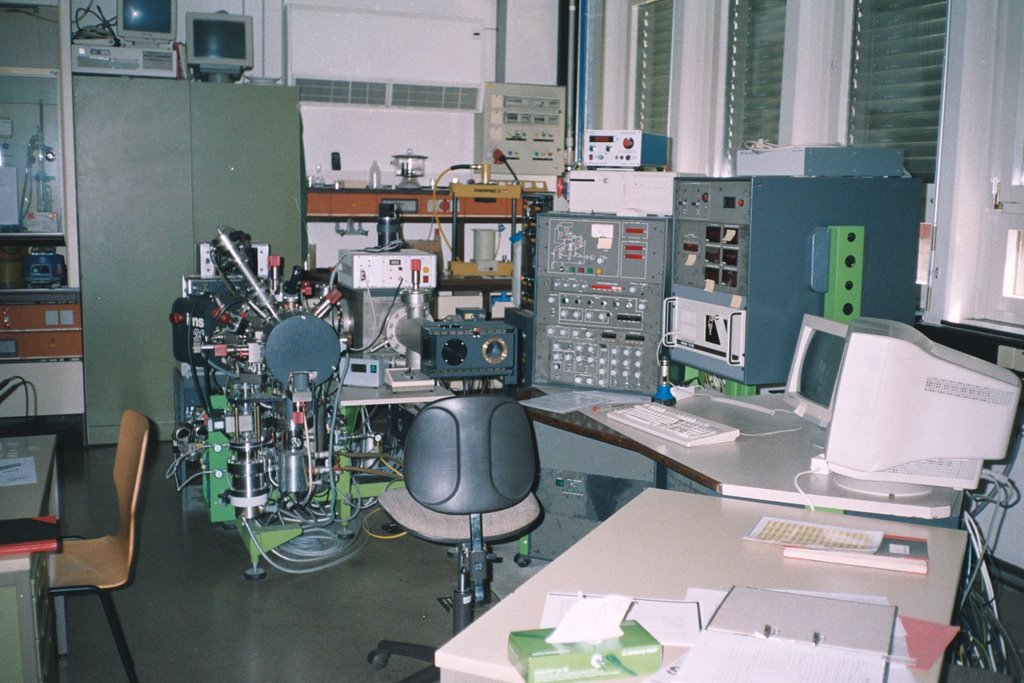
Spectroscopic techniques have pushed the materials research a notch ahed, whether its grain boundary segregation or higher phosphorus content in steel, spectroscopy have proved to be determining tool in these field of research. Secondary ion mass spectroscopy is another such technique used primarily for determining diffusion of elements inside a material through various processes. Whether its lattice or grain boundary diffusion, whether it’s a two phase material or a single phase, SIMS has provided very accurate diffusivity measurement.
How it works? Well the mechanism sounds quite simple but the instrumentation is not so simple. An ion beam is used for scan over the surface of the specimen. This powerful beam of O+, Cs+, or O- takes out material from the surface of specimen. O2 or Cs gases are ionized in duplasmtron and using few electrostatic lenses they are focused on the specimen. This beam ionizes the materials from the surface and takes out materials from the specimens. After the ions flies from the surface, they travel under a potential different. Lenses and filters take out the high energy ions from the ion flow. These ions are mass separated in a magnetic separator where the ions are separated depending on their mass to charge ratio. Another technique used for mass separating the ions is through quadrapole where crtical voltages are applied to separate specific ions. In case of magnetic separator the trajectories of the flying ions are exploited, the ions with different mass to charge ratio have different trajectories.


Schematic of the column in which the ion moves. courtesy Cameca

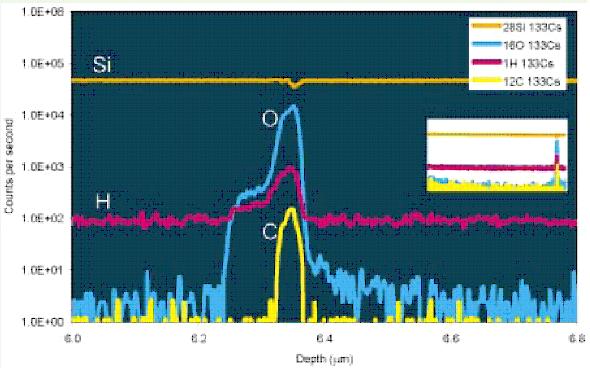
The crater which forms due to the rastering of the ion beam covers a region of 250  250 µm. The depth resolution of this instrument sometimes will be as high as 1-2 nm. New generation SIMS now-a-days provides secondary electron imaging facility, so it is possible to identify phases or elemental changes in the material. This technique is also useful for studying interfaces in the semiconductor devices or measure lattice and grain boundary diffusivity independently. A major use of SIMS is in locating impurities in the materials, xray spectroscopy or other spectroscopic technique many a time fail to present the information that can be achievable through SIMS.
Presence of C and O impurities in a bonded Si wafer. Courtsey Ansto

Many companies in the world make SIMS, as I took picture from the web pages of companies I am providing the link below.

Cameca

Ansto

Thursday, October 26, 2006

Festive mood

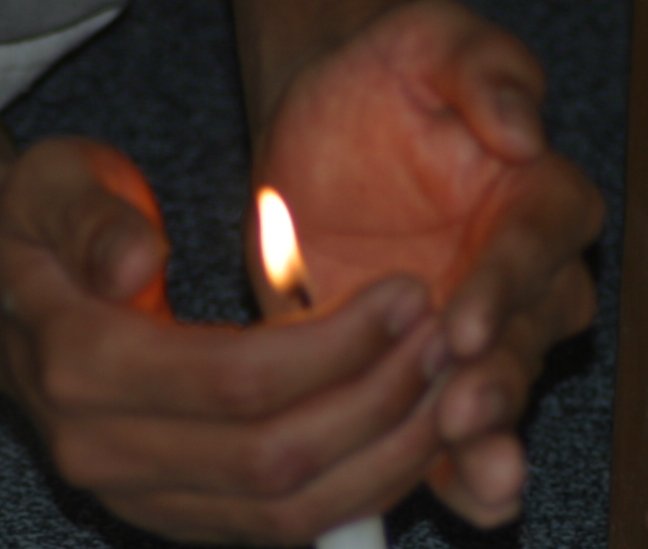
This is how i was guarding my festive mood....


from this..............


My lab went through a major renovation after a gap of few years and i was really amazed to find the amount of junk we accumulated.

Monday, September 18, 2006

..Its really touchy

....today Abi's post on first women scientist in IISc was really a touchy one. I hope things have changed quite a bit now but still it is very upsetting to know about plights of women scholars, especially in places like indian institute of science in 30s. I am sure there are more real life stories and i feel quite depressed everytime i hear them... Guru's comments to this post also contains some interesting links.

Tuesday, September 12, 2006

Not so Magical

I got this idea in the morning, probably couple of hours of sleep made me so imaginative. Its kind of wierd, still felt like putting it down.
Have you seen magicians in the schools, I have watched them, watched them too closely, when I was in Kindergarten I saw this magician with very gorgeous looks, had thick paint on his face and a blue colored long jacket on. He never looked like a normal human being, he was a ‘magician’. I marveled at his skills and magic, at the end on his show we all agreed that there is something beyond our understanding, yes! I met with some “axioms”. During high school time it was even worse, the guy was fooling the whole school and he was not even looking like a ‘magician’, that was very surprising and challenging too, challenge was to crack the code! By the end of the show we all knew it was some trick and how to do that, but many couldn’t support the reason and thus it became a axiom such as only magicians can take rabbits out of their hats, we never knew how it happened. They weren’t the ones who float the semi nude girls in air but still they had larger impact. See for example, myself, keeping a vivid memory of the events, why? because I didn’t have an answer or my dad or the teachers.
How good is the idea to take kids to a magic show? Its fun but not so much, it’s a death of an inquisitive mind. This is probably one stage where we are taught to believe axioms. Recently on of my colleague, after a bucket of beer argued to me that, you can not progress a single inch in science if you don’t believe axioms! He is an astro-physicist! I did not like the idea of this magic shows in the school. I know many magicians say its pure science or pure trick, but as long as the reason is elusive, it’s hard to believe. Its easier for me now to understand why such things happen, but 20 yrs. back I needed a man to tell me what is not so magical about this. I still don’t know many of the tricks how they show on stage, but now I know I am fool at that point, but a kid surely requires a better treatment. Another unfortunate observation is; when you mention about magic shows, people spontaneously tell oh! I will take my child with me…(of course to make them a big fool!). I have all sympathy and regards for the magicians but I have a problem with the audience….

Saturday, September 09, 2006

This novel..

I read this 'goddamn' novel called "The catcher in the rye" by J. D Salinger. I liked it 'and all' but many a times Holden 'killed me'. I liked many parts of it but this speech by Mr. Antolini was really good.

"....This fall I think you’re riding- it’s a special kind of fall, a horrible kind. The man falling isn’t permitted to feel or hear himself hit bottom. He just keep falling and falling. The whole arrangement’s designed for men who, at some time or other in their lives , were looking for something their own environment couldn’t supply them with . Or they thought their environment couldn’t supply them with. So they gave up looking. They gave it up before they ever really even got started...."